Tag Archives: outdoorlearning

When is a stone not a stone and a stick not a stick?

At Cambusbarron Village Nursery, there are no walls around imagination — it grows wild in the woods.
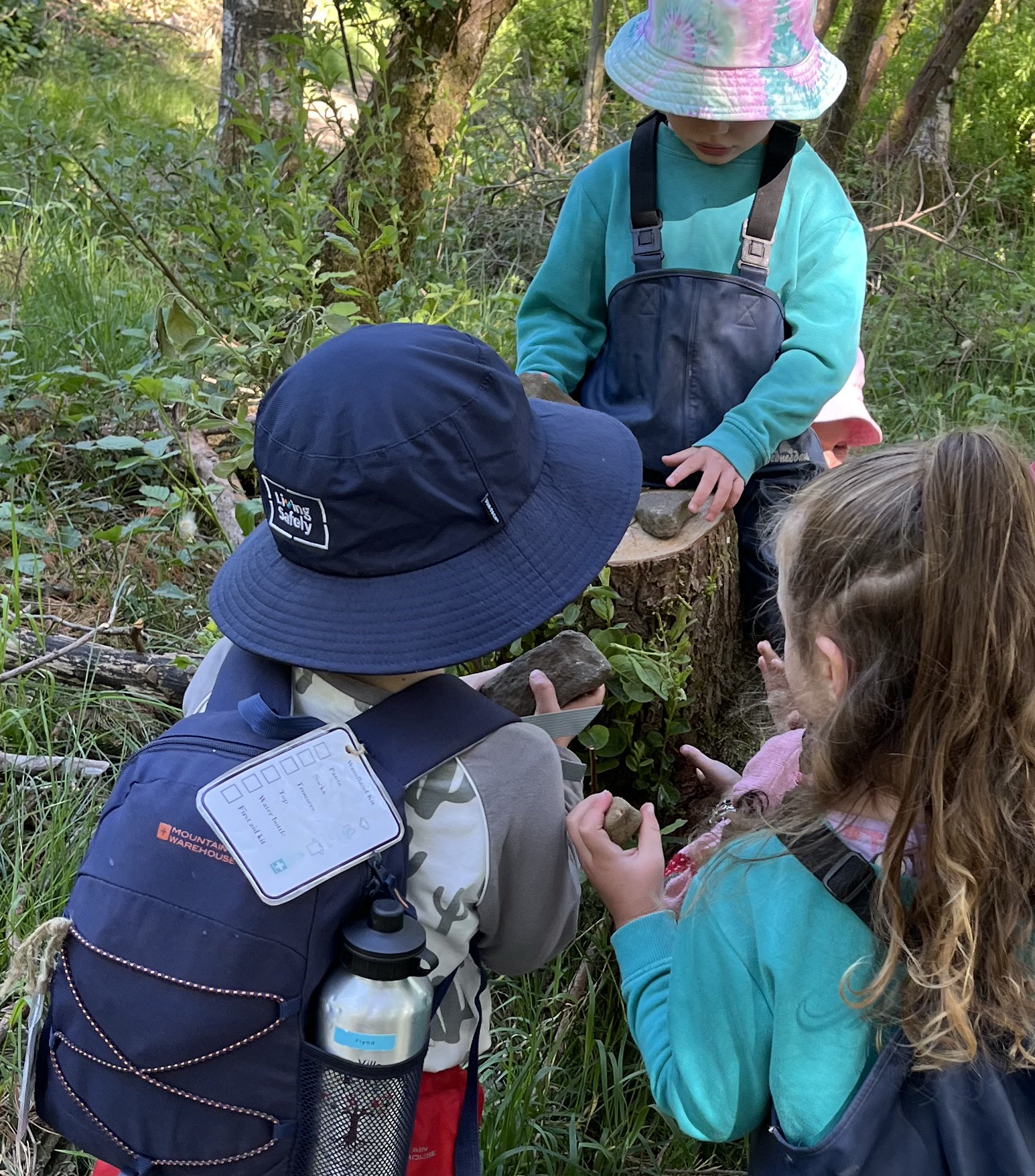
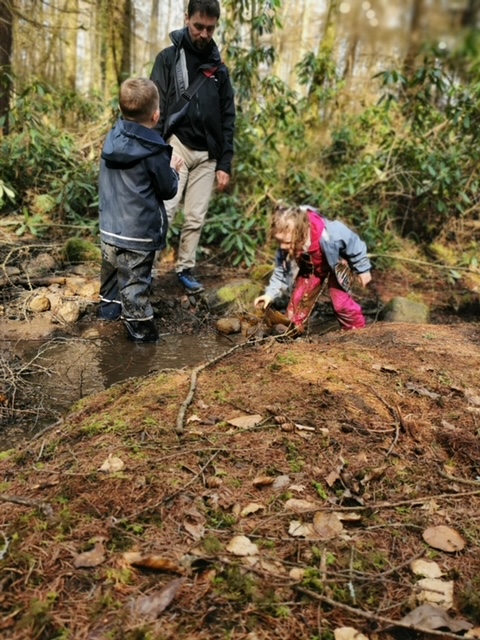
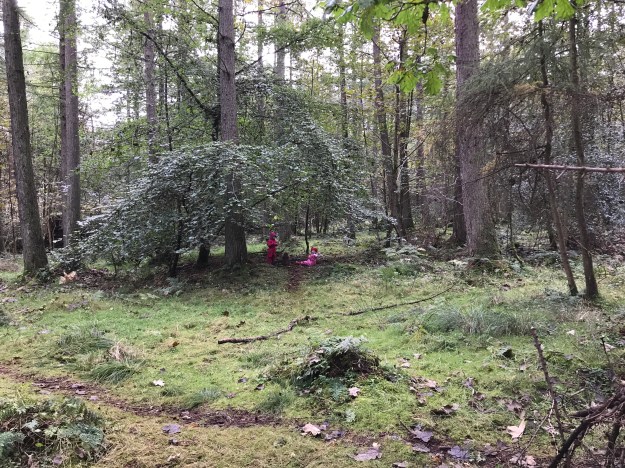
This week, I watched as a group of children created a croquet game using a stick, a stone, and a hoop made from a pair of willing legs. A tree in our woods has long been recognised as the local “McDonald’s,” where children regularly exchange pine cones and stones for their chosen happy meal, usually chicken nuggets although, occasionally, it has been known to supply the odd apple or orange.

A tree stump we pass has become an ice cream stand, and the stories built around it are as rich and varied as the flavours imagined. These games aren’t planned or prompted by adults. They emerge because nature leaves space for invention.

There’s no “right” way to use a stick or interact with a tree stump. A stick can be a pencil, a wand, a fishing rod — or something entirely new. A stone can be money, a cake, an egg — or even, just a stone.

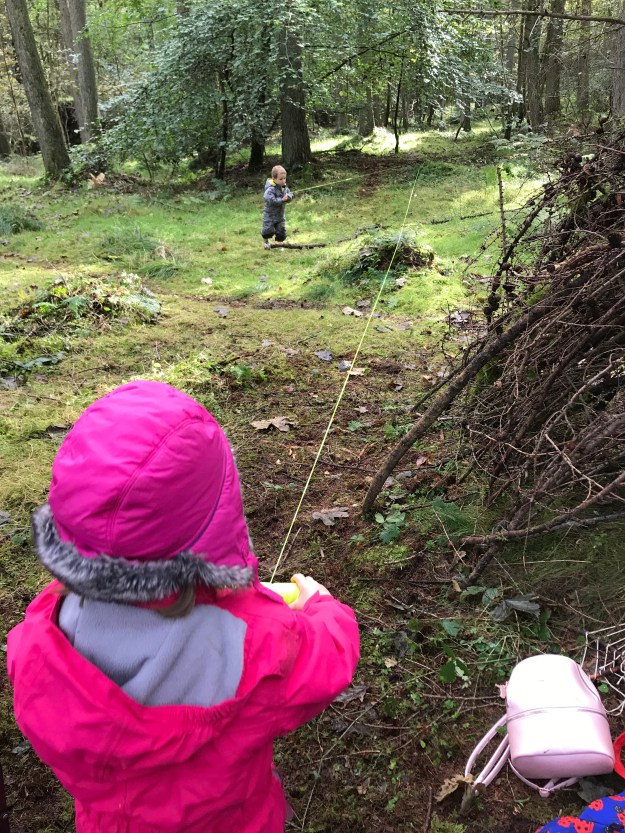
This week, our children needed a stone simply to be a stone, a weight heavy enough to anchor a pulley system they were building. No story, no character — just problem-solving, resourcefulness, and a moment of real-world thinking.

Children’s development thrives when they balance real-world experiences with imaginative exploration, as both contribute in equally meaningful ways.

In open-ended environments like the woods, imagination doesn’t come in a box, encased in plastic or dictated by instructions. It’s alive, spontaneous and rich with possibility. Through this kind of play, children practise problem-solving, collaboration, creativity, resilience, empathy, communication, leadership, and critical thinking — all while immersed in the sensory richness of the outdoors.

At CVN, we value time, space, and natural materials because they fuel not only imaginative thinking but also problem-solving, creativity, resilience, and social skills. When children are given room to explore and experiment, confidence, curiosity, and joy naturally flourish.

These rich, imaginative experiences also help children develop key capacities from our Flourish Framework — including engagement, independence, and fulfilment — laying strong foundations for a flourishing life.
Getting Closer to becoming a Fully Outdoor Nursery

After weeks of warm sunshine and dry days, it’s easy to forget just how wet, wild, and unpredictable Scottish weather usually is.

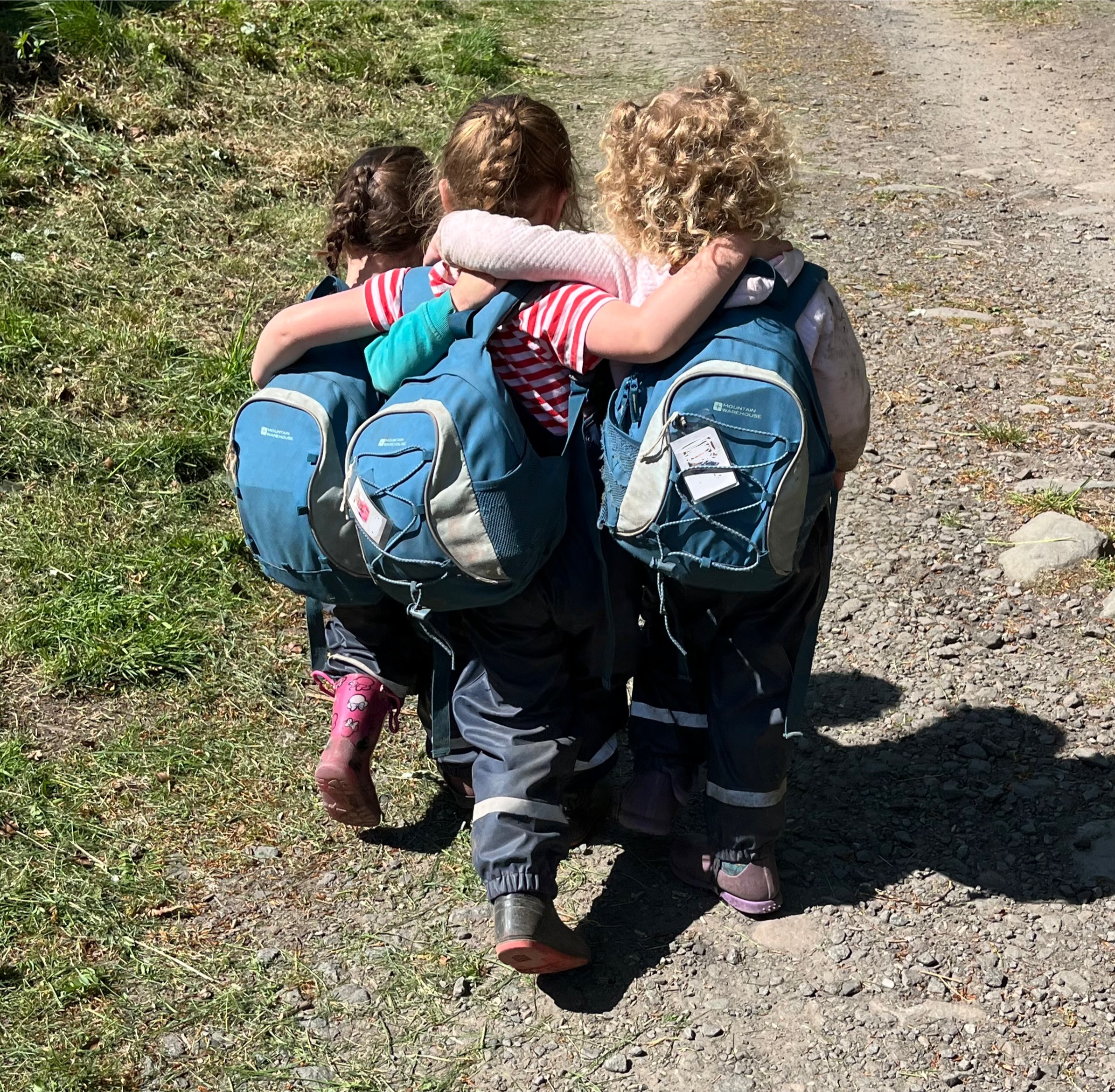
We’ve been making the most of this incredible spell of weather – sun hats and suncream and lots of outdoor adventures. But while the sun has been blazing, there’s been something quietly wonderful about being in the woods: cool, shaded, and calm. Even in heat like this, Gillies Hill Community Woodland offers a natural sense of balance. That’s part of the magic of the temperate woodland environment.

So while we’re still soaking up every drop of sunshine, we know the rain will return. And when it does, we want to be ready.

Last week we shared that we’ve secured planning permission for our woodland shelter—a big milestone on our journey to becoming a fully registered outdoor nursery. This week, we want to share more about what that shelter is for, and what it represents.

Because while the building might be small, the thinking behind it is anything but.

The purpose of this building is simple: to support children’s experiences outside.

It’s not an indoor base in the traditional nursery sense. It’s a shelter—somewhere children can dry off, warm up, reset, and then head right back into the woods to play.

We’ve always believed children learn best outdoors—but that doesn’t mean they should have to stay cold or wet to do it. The shelter gives them comfort, choice, and the chance to keep enjoying outdoor play in all weathers. It makes extended time outside not just possible, but sustainable.

It also gives us secure, weatherproof storage, and a flexible space for things like group time, nappy changes, or a quiet moment out of the wind. It’s there when it’s needed—not as a fallback, but as a support for everything that happens outdoors.

Behind this shelter is a bigger picture.

Over the past year, we’ve been thinking deeply about what children need to grow, learn, and thrive. You’ll hear more about that in the months ahead as we continue shaping and sharing our curriculum thinking. But the direction is already clear.

For us, it’s about more than what children do—it’s about how they feel, and who they’re becoming.

We believe:

Children need to feel safe and supported to take healthy risks. They need strong relationships to explore their world with confidence. They need to feel independent, to make choices and test their ideas. They learn most when they’re engaged—in real experiences, in real places. They thrive when they find joy and purpose in what they do. They benefit from a sense of belonging—knowing their contributions matter. And they grow best when they’re given time, space, and trust.

The shelter plays a quiet but important role in all of this. It helps us offer a consistent, child-led outdoor experience that’s grounded in both care and learning.

We’ve now submitted our building warrant application and are working closely with Cambusbarron Community Development Trust to finalise the lease. We’re also focused on securing the funding we need to bring this vision to life.
There’s still work to do—but we’re getting closer. Thank you to everyone who’s helped us get this far.

Next time, we’ll be exploring how environments like Gillies Hill Community Woodland do more than support play—they actively shape learning. Because when children are outdoors, the world becomes the teacher.

Natural Light, Healthy Sight

A recent joint policy statement from the International Sport and Culture Association (ISCA)—alongside 13 organisations across health, education, and outdoor sectors—shows that short-sightedness in children is rising fast. And too much screen time, not enough daylight, is a big part of it.

The statement warns that half of all school-leavers in Europe could be short-sighted by 2035. But there’s hope—just two hours outdoors a day can make a huge difference.

Vision problems affect more than just eyesight—they can impact learning, confidence, friendships, and wellbeing.
This is one more reason why we do what we do: fresh air, exploring the real world, and natural light every single day. Being outdoors isn’t an extra at CVN—it’s the main event 😉

Preliminary Ecological Appraisal

Echoes Ecology have now completed their PEA of our proposed site in Gillies Hill Community Woodland. Their executive summary records “There was no field evidence of protected species found during the survey. There is suitable habitat for nesting birds and commuting and foraging for bats. If proposed works are to be undertaken during the breeding bird season (March to September inclusive), then any areas of the Site that need to be cleared of vegetation must be shown to be free of nesting birds prior to works commencing. There are no other recommended surveys.”

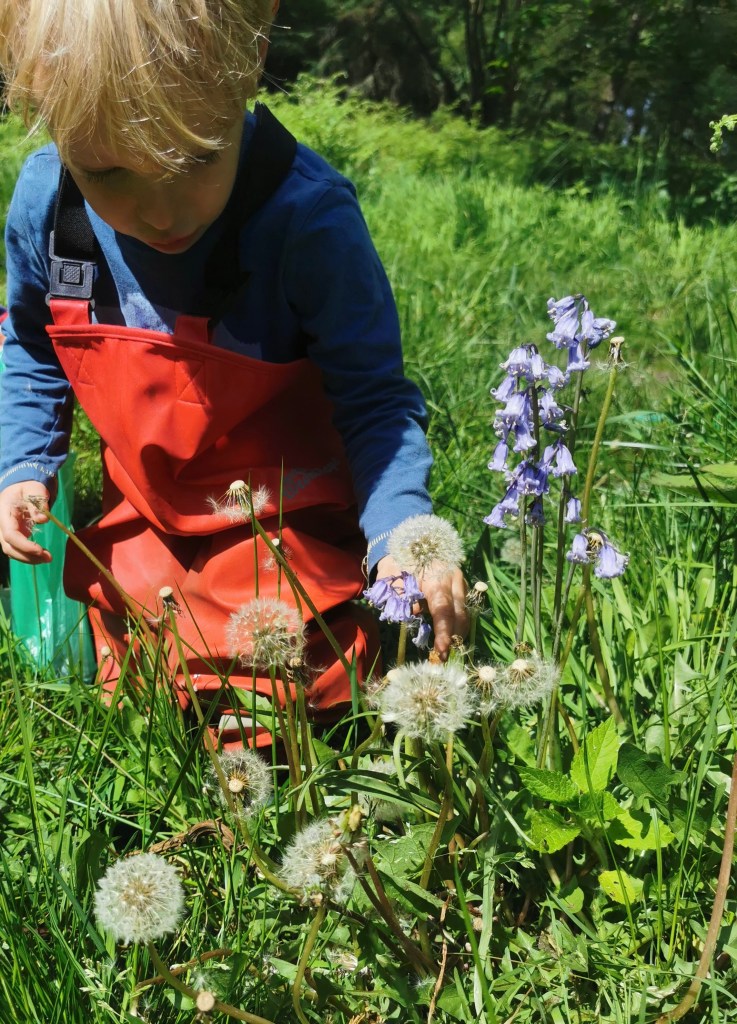
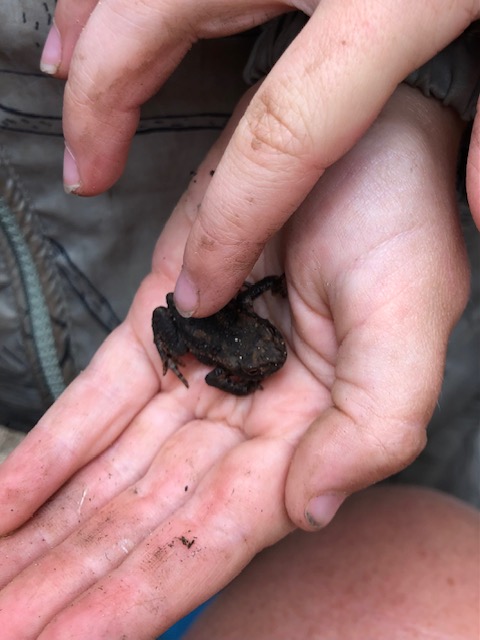
Echoes Ecology report lists several species from the Scottish Biodiversity List which may be present in the woodland – these include bats, toads, hedgehogs, red squirrels and native bluebells. We have seen lots of bluebells this spring, we regularly see toads and have once spotted a red squirrel. We need to keep our eyes peeled for the rest!

Visit from Echoes Ecology

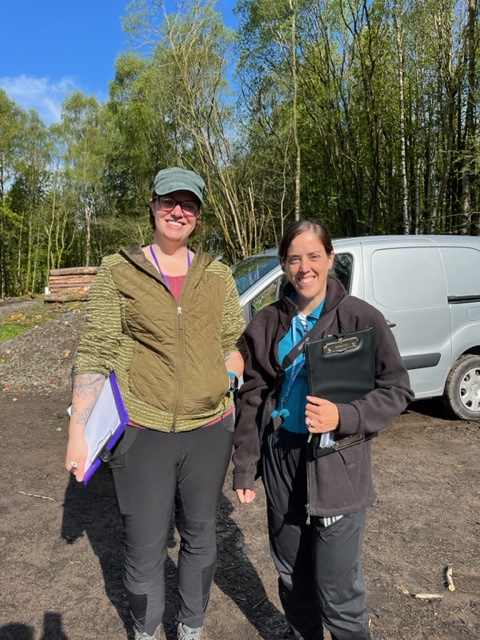
We were very pleased to welcome Kay and Heather from Echoes Ecology to our woods this morning. They have picked a beautiful, warm, sunny day to visit!

Kay and Heather are are conducting a Preliminary Ecological Appraisal (PEA) of our site in the woods which will document the range of habitats present and will look for signs of any protected species. This initial appraisal will inform the requirement for any future surveys.

Kay is known to us at CVN having helped us put up squirrel and bird feeders in the woods a couple of years ago. We are hopeful that our children can again be involved so that we can learn more about the creatures that live in our woods.

Visit from Learning through Landscapes

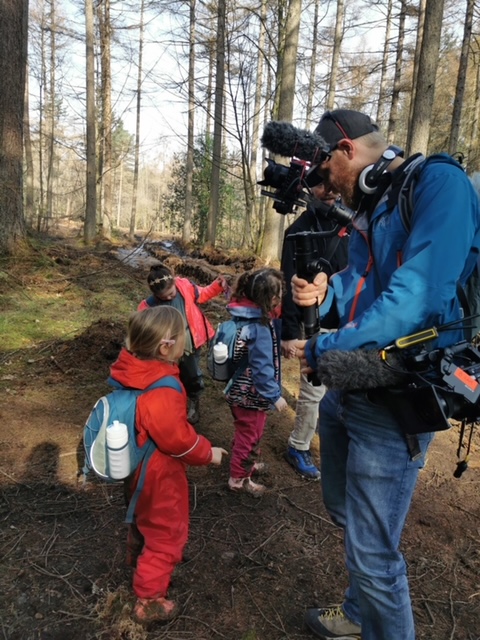
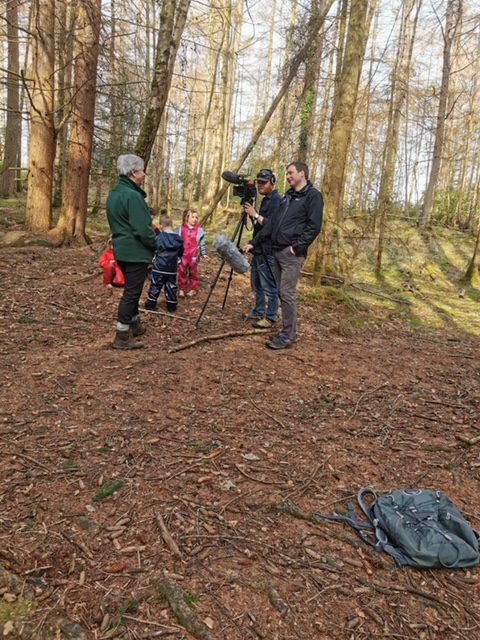
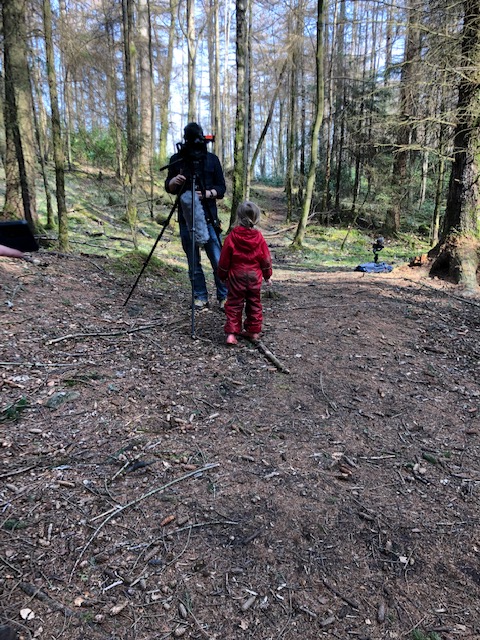
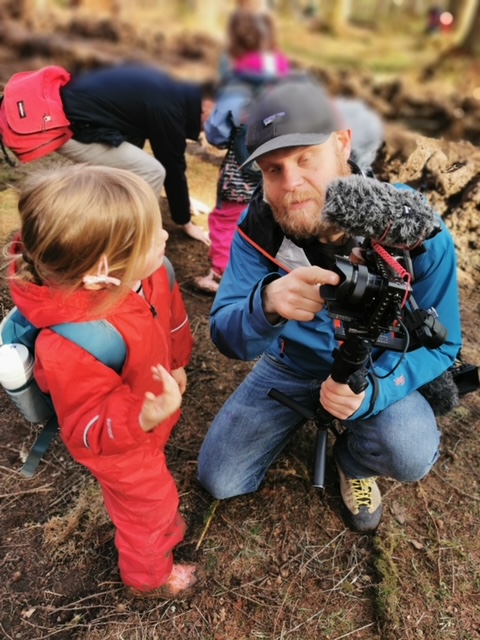
Last week a team from Learning through Landscapes Scotland visited us on a glorious sunny spring day. LtL are making 24 short films for Scottish Forestry about managing sites for regular use by early years settings and asked if they could come and see what we get up to at Gillies Hill Community Woodland. We were very happy to meet them and show them around. We were also very interested to see their film and sound equipment.

National Lottery Funding Success

We are thrilled and delighted to learn that the National Lottery Community Fund has awarded us £10000! This money will help fund the next stage of our project to develop our new nursery building in Gillies Hill Community Woodland.

If you haven’t heard about our plans or want to find our more, check out the pages on our website and/or follow our new dedicated Instagram @CVNintheWoods.

We always welcome comments and feedback so you can do that too via our feedback link. If you prefer a less technological method, give us a call on 01786 430497 or, better still, stop by and have a chat. We’re always delighted to discuss our plans. If you spot us when you’re up in the woods we can even show you some of the things we get up to!

You can support our project financially too, see “Support Us”.

Woodland Play 30 Sept 2019

What a lovely autumn day we had today in the woods. We put up a hammock and the children enjoyed taking turns swinging in it. We made a fire and, this week for a change, cooked some damper bread over it. The children kneaded the dough before we wound it like a snack around a stick and held it over the fire. The wood was very damp so we all had to work hard to keep the fire going. We collected some wood to store which will hopefully keep a little drier for future occasions.

Hedgerow Harvest

We were very busy at Nursery today! We made a new sign for our garden and then went out for a walk to find some autumn treasures. We found apples, elderberries, hawthorn berries and loads and loads of brambles. We picked some and will try making some jam to eat with our bread. We also spotted some conkers on a conker tree and acorns on an oak tree. So many things to see in our countryside 👍🏻


Forest Leader Training Day 2

Another beautiful day at Jupiter Artland began with repeating our getting to know you task, this time more light heartedly and, with relationships already more developed, in a more relaxed atmosphere.

We repeated our knot tying and I was pleased to be able to recall the processes from yesterday! The course leaders continually highlighting the teaching methods and skills used to link into how we will, in turn, use these with our learners. I particularly like the way the tasks are set up to support the learning process. I am conscious that, as a learner, I am anxious to get things right and not to fail. It is worthwhile recalling that these feeling of stress and anxiety may be present in those who are learning from me and that one of my tasks is to acknowledge these feelings and support my learners in their learning journey to make it a positive one.

Our first session in the forest was spent in a special spot of our choosing and with time there just to “be”. I chose to sit in an area of sunlight peeking through the trees and to listen to the bird song above. I was intrigued to hear so many different songs yet only to be able to spot one bird.

We made picture frames using knots learned earlier then used them to frame an area of ground and try to see how many mini beasts we could find in it. The number of tiny creatures living beneath the decomposing leaves was amazing, This led to an activity of assessing connectedness, how all aspects of nature impact on each other and how, as humans, we should interact with nature to minimise our impact.

A significant task was to conduct an initial risk assessment of the site. We looked at the individual layers of the woodland area, the ground level, the intermediate level, the shrub level and the canopy level. It is worth remembering that our learners in particular are so much smaller than us and that getting down to their level is important so that we can see risks from their perspective. Risk is subjective and we all have different interpretations of what is acceptable or not but we all agreed that risk is part of the learning experience and should not be removed.

We were asked to choose our 3 main reasons for why we believe in learning in nature. I chose *fun, *developing life-skills and *developing connections and respect for the natural environment. It was so hard to choose just 3!

We finished the day with some creative endeavours, I made a little munchkin man with a string vest and a caterpillar using my knot skills from earlier. It was great to see all of the other creations and admire their inventiveness.

The day finished with more reflections on the learning process and also on the necessity to evidence learning in paperwork. That is the daunting part and we all agreed that, while necessary, it is not the essence of why we are taking part in the experience – that being to develop our skills to improve experiences for our learners.