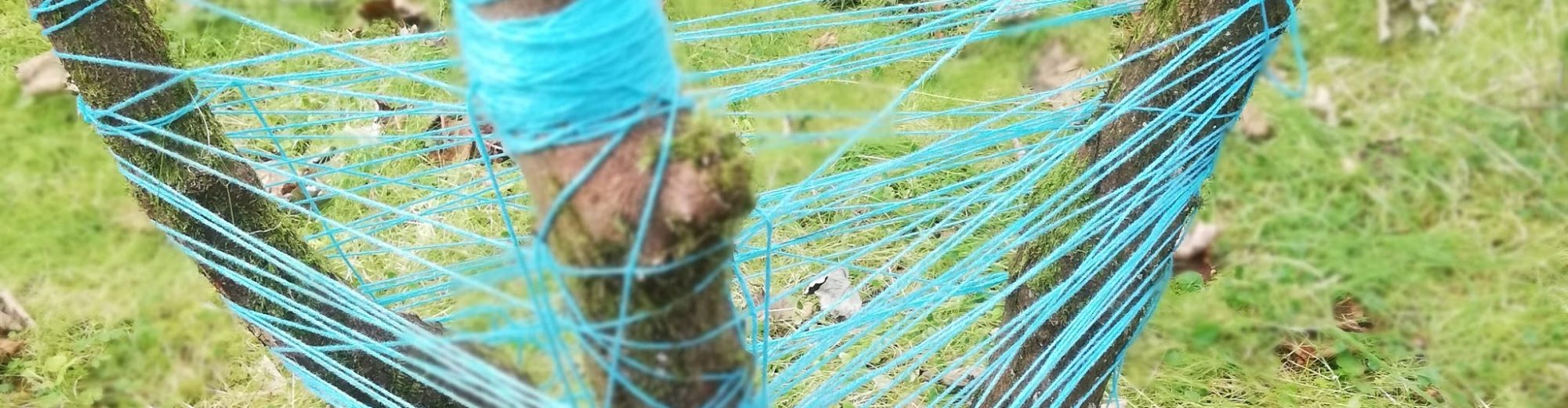
The weather over the last couple of weeks has been interesting!! One moment we’ve had bright and even warm sunshine, the next, very heavy rain showers. After the “glorious summer,” and, as autumn approaches, it seems we’ve slipped back into what we often call “bad weather.” But when did we start to think of rain as a problem, rather than part of the rhythm of the seasons?

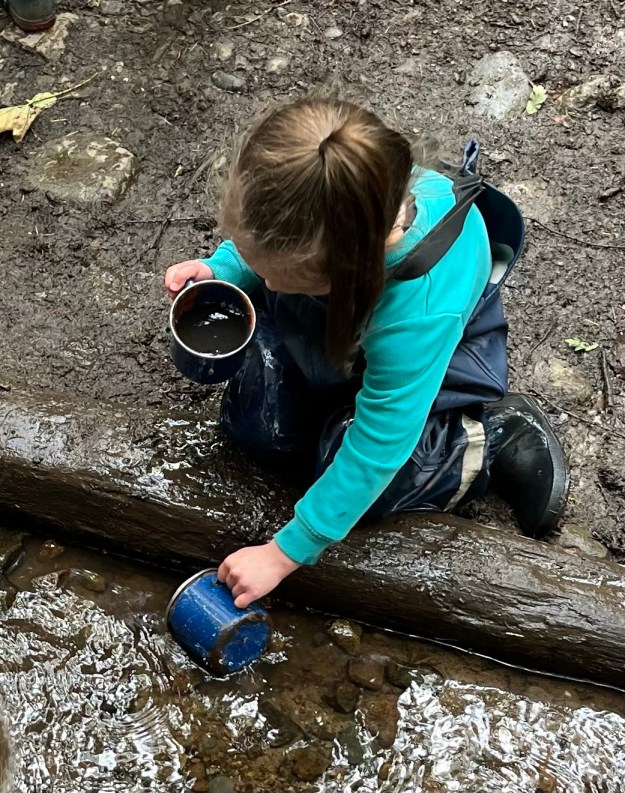
So often we hear talk of “awful weather,” “a dreadful day,” or being “horribly wet.” Children, on the other hand, don’t begin with that opinion. It’s we, as adults, who pass it on — just as it was once passed to us. Left to themselves, children are drawn to water in any shape or form: the burn to wade through, puddles to splash in, and mud to squelch through. Their play reminds us that rain is not something to dread, but something to celebrate and enjoy.
At nursery, we try to hold onto that joy. For us, rain brings the burn to wade through, puddles to splash in, and mud to squelch through. On rainy days the children can collect water, scooping and pouring it in their play. Such experiences make for a simple but important lesson: without rain there would be no puddles, no mud, no flowing burn.
Our Sustainable Development Goal focus this term is Climate Action. We’re using this focus to help children see that rain is precious. Instead of turning on a tap that brings water from an unknown source, we are learning to reuse what nature gives us. We’re learning to value our resources — and to see that when they are gone, they are gone.
That message is especially important as we look ahead to our plans for the woods.
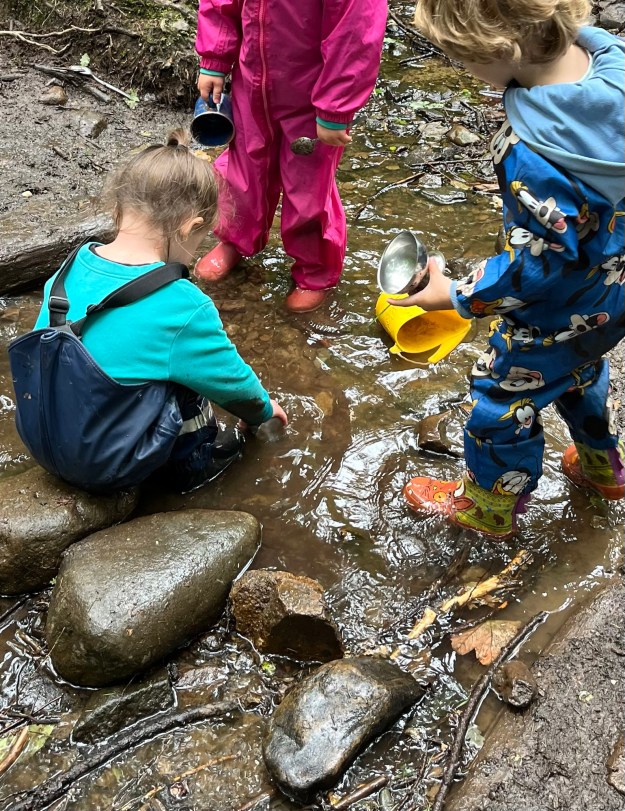
Once we are fully based there, we’ll be off-grid — with no tap on hand. Collecting, reusing, and valuing water will be part of our daily life. Just as it already is for so many people in communities across the world.
So perhaps the next time the heavens open, we can take our lead from the children — jumping in puddles, pouring water from one bucket to another, and noticing how rain makes everything around us come alive. Rain isn’t a nuisance, it’s a reminder of how deeply we depend on the natural world.

- Next time it rains, set out a bowl or bucket and watch together as it fills. Let your child decide what to do with it — water the plants, mix up some mud pies, or simply pour it out with a splash.
- And here’s another challenge: notice how often you describe the weather in a negative way. Instead of “horrible day” or “dreadful rain,” try re-framing it — “great puddle weather” or “perfect for the plants.” The words we use shape how children feel, and celebrating rain starts with us
 Cambusbarron Village Nursery