
Last Wednesday brought the kind of rain that soaks through everything. Some children found it tough — not quite sure how to enjoy the feeling of being wet — while others were delighted, dancing in the mud and testing how much water would pour off the tarp when they tugged it! Staff offered plenty of hugs and encouragement to support those who were more hesitant to join in.

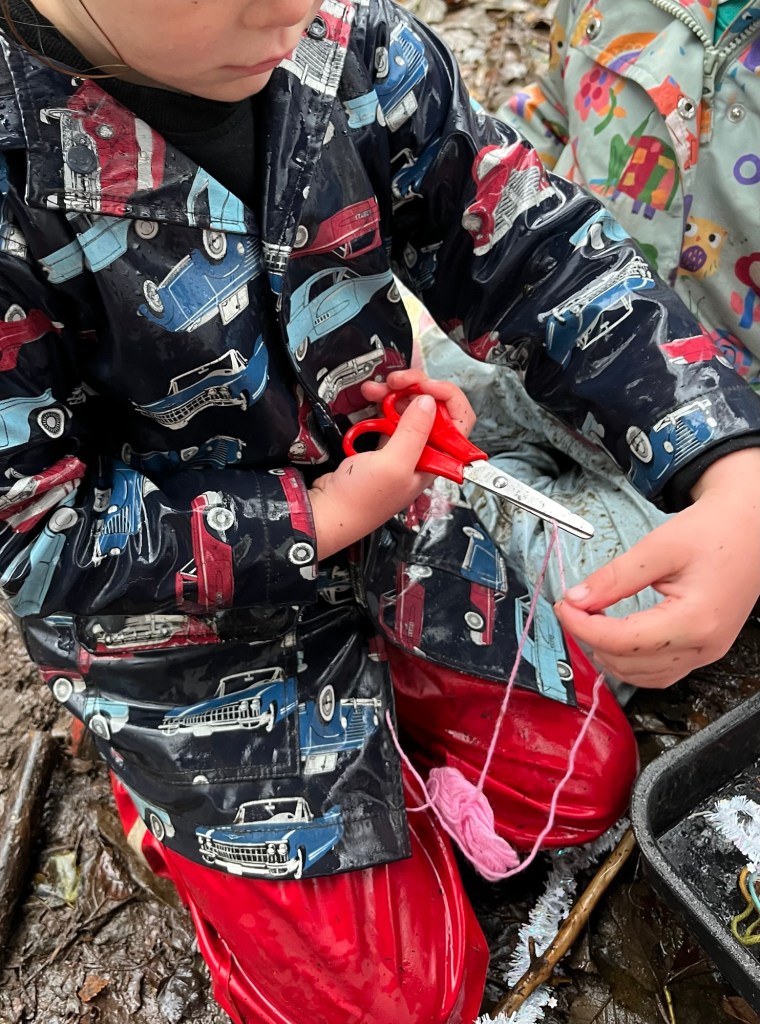
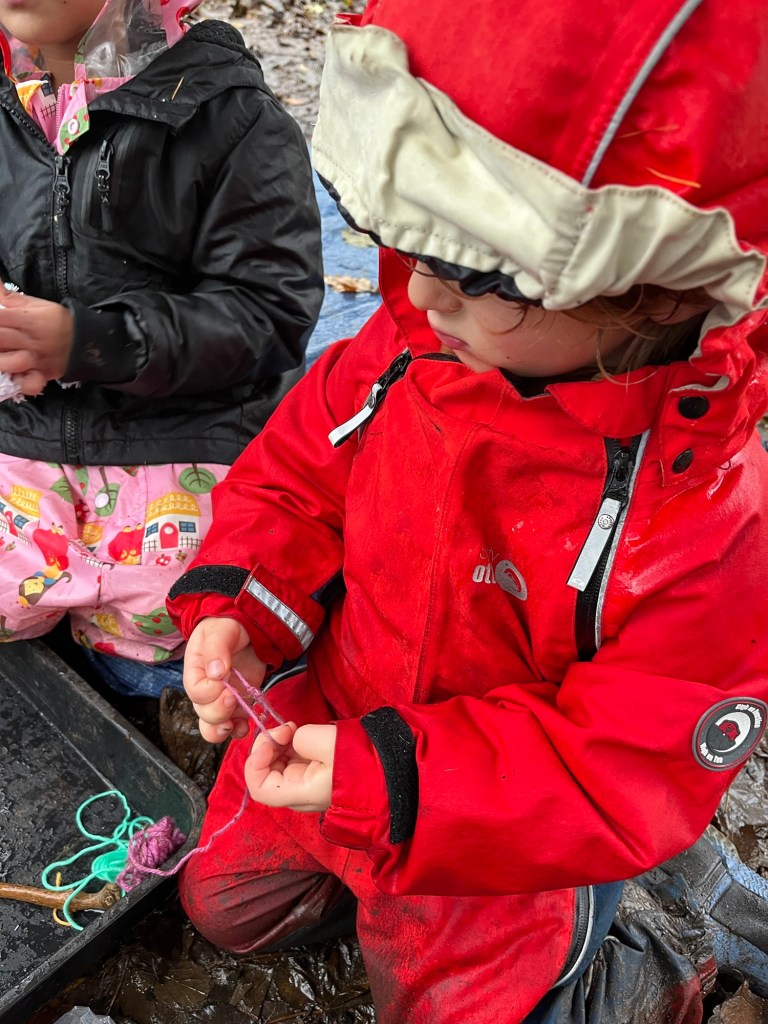
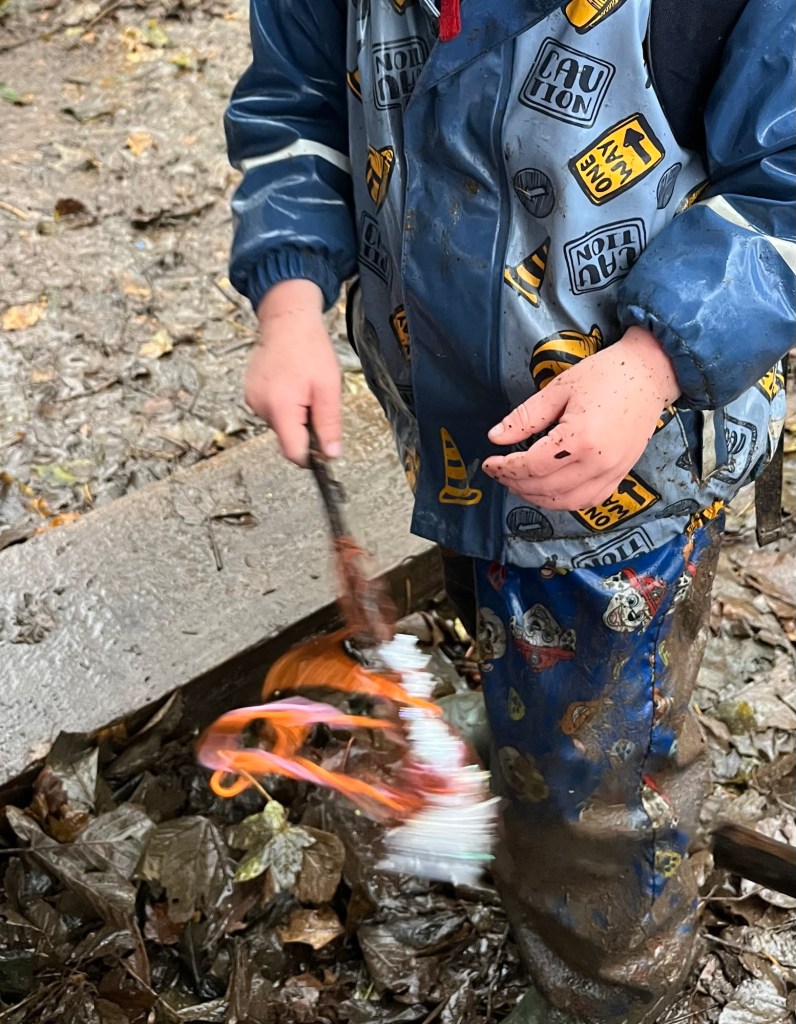
As it was Bonfire Night, we had planned to have a mini bonfire, but there was just too much rain so we decided to postpone. Some children, however, created their own “fireworks” – cutting pieces of wool, tying them to sticks, and swirling them through the air (great for building those strong shoulder and arm muscles needed for early writing). There were no real sparks flying, but plenty of energy, imagination and determination sparkling through the rain.
The next day I joined colleagues from across Scotland at a Thrive Outdoors knowledge-sharing event in Stirling, looking at inclusion in outdoor play and learning. It was a good day for conversation, reflection and reconnecting with familiar faces.
One discussion stood out to me. When we talked about what makes outdoor spaces inclusive, our table kept coming back to the same point – that inclusion starts with relationships, not resources. When children are surrounded by adults who notice, listen and adapt, almost any space can become one where everyone feels they can belong.

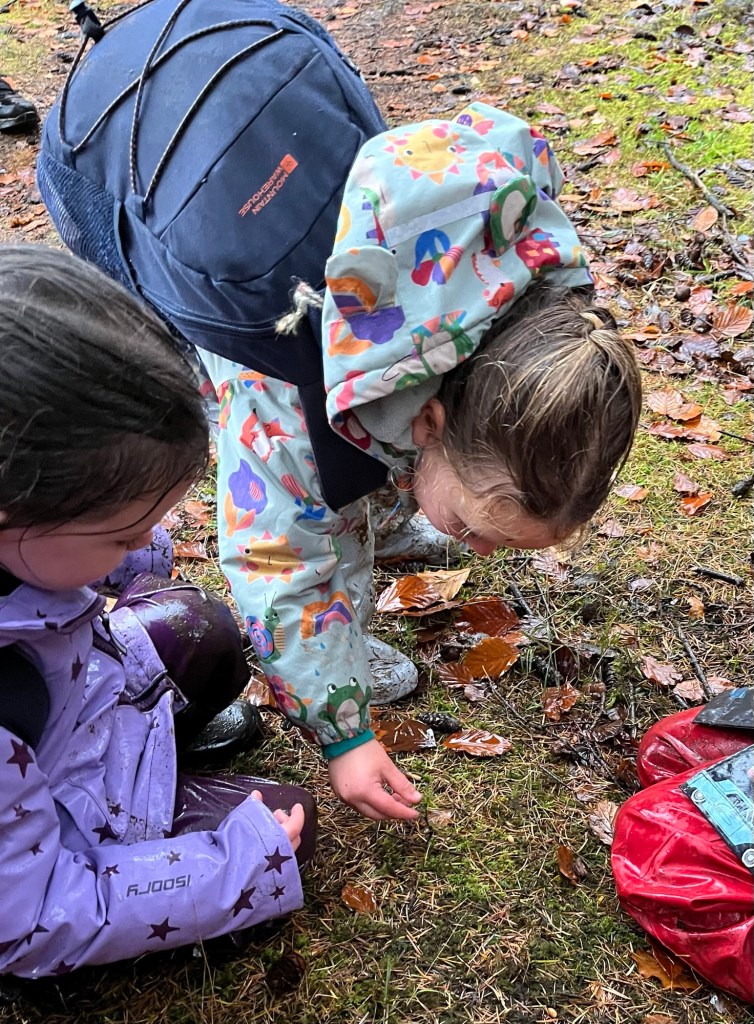
That summed up what we’d seen the day before. What looked like a very wet morning was really a reminder of how differently children experience the same conditions, and how important it is to take our time and meet each child where they are.
That’s the essence of slow pedagogy – giving learning and confidence time to grow without rush or pressure, and recognising that every child’s journey is unique. What feels exciting for one might feel uncertain for another, and that’s okay. Slowing down allows us to notice those differences and create the time and space for every child to join in, in the way that works for them.


Next time it rains, head outside for a few minutes together. Watch how the water moves across different surfaces, listen to the sounds it makes, or see what patterns or reflections can be seen in puddles.
 Cambusbarron Village Nursery