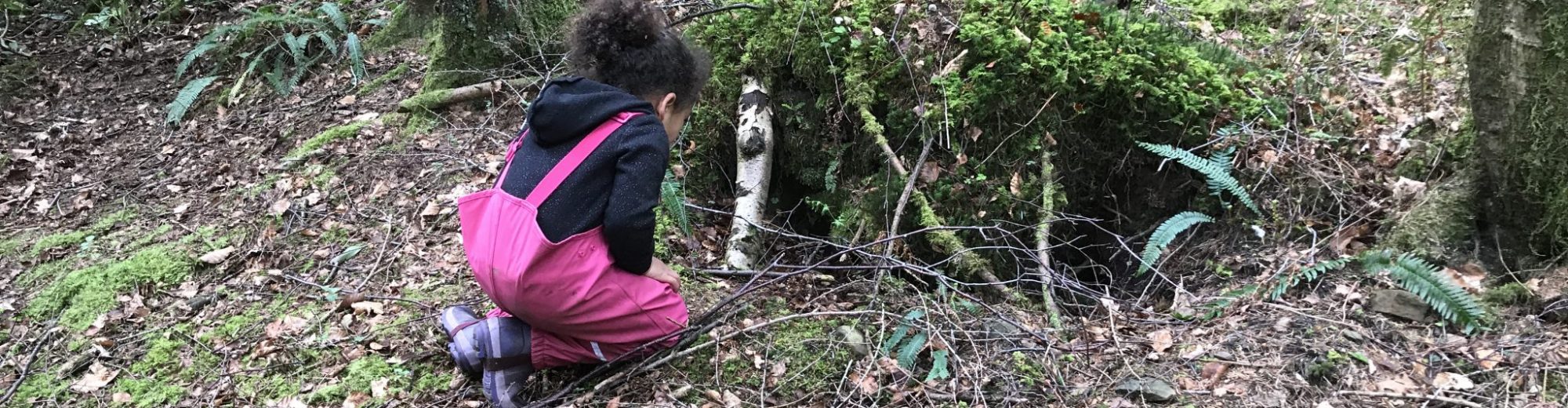
This week we’ve been looking at maths in the natural world as we celebrated Wild Maths, this year’s theme for Maths Week Scotland.
So often, we think of “doing maths” as something tricky you have to do while sitting at a table with pencil and paper. But in reality, maths is fun! It is happening all the time all around us — in the pattern of nature, in the way children play, and in the choices they make moment to moment.
Outdoors, children encounter maths in many spontaneous ways.
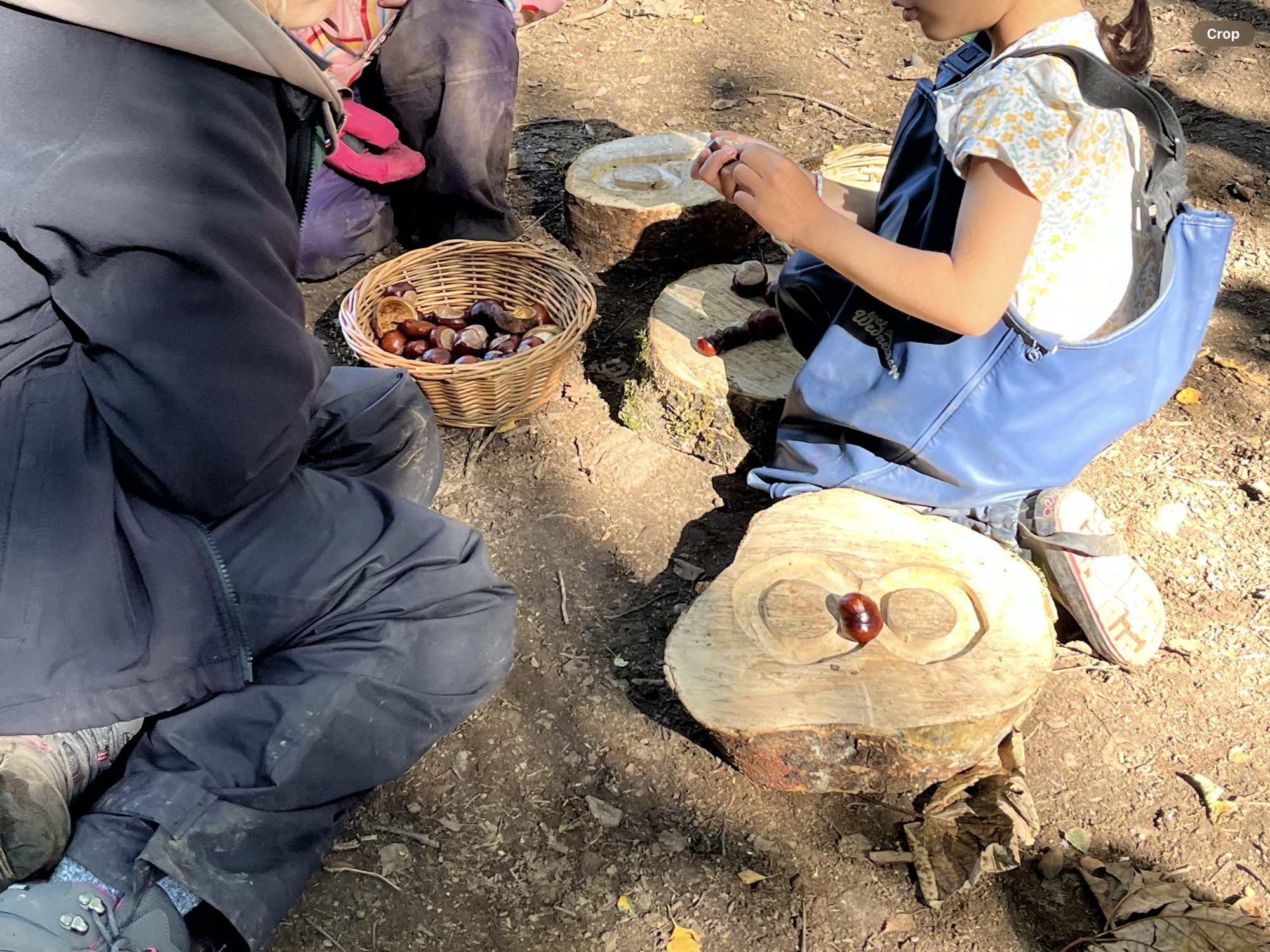
A handful of conkers becomes a chance to share fairly.
A few pinecones might be used to pay for an ice cream
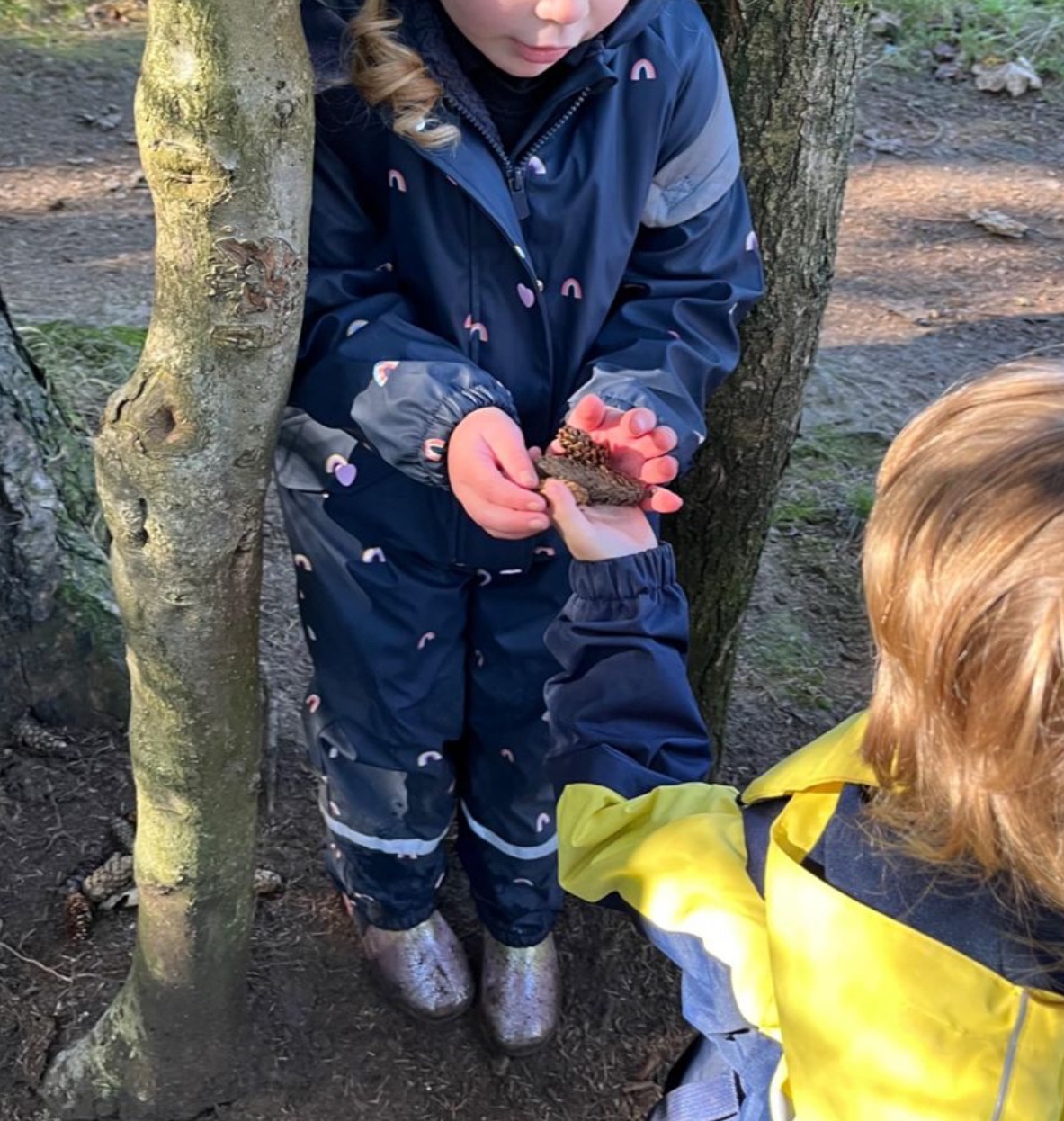
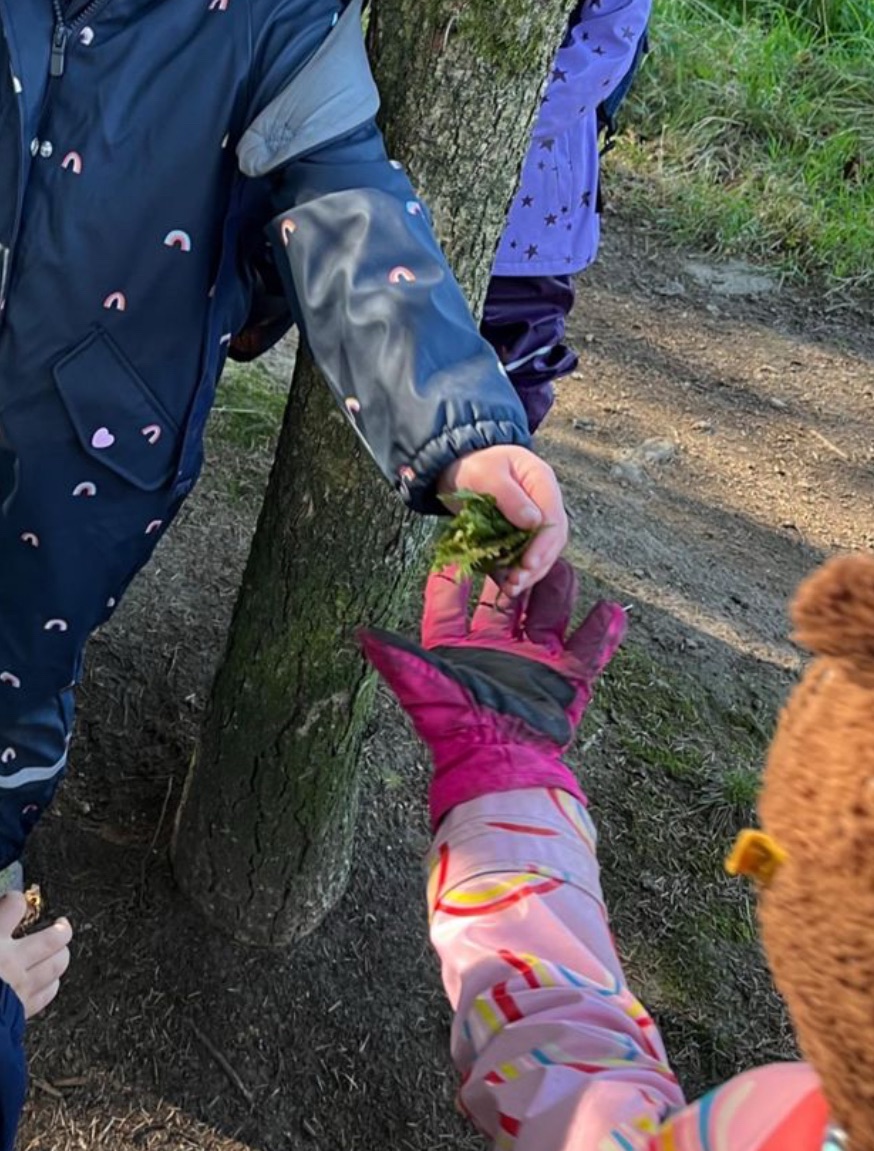
while a piece of moss can be offered as change.
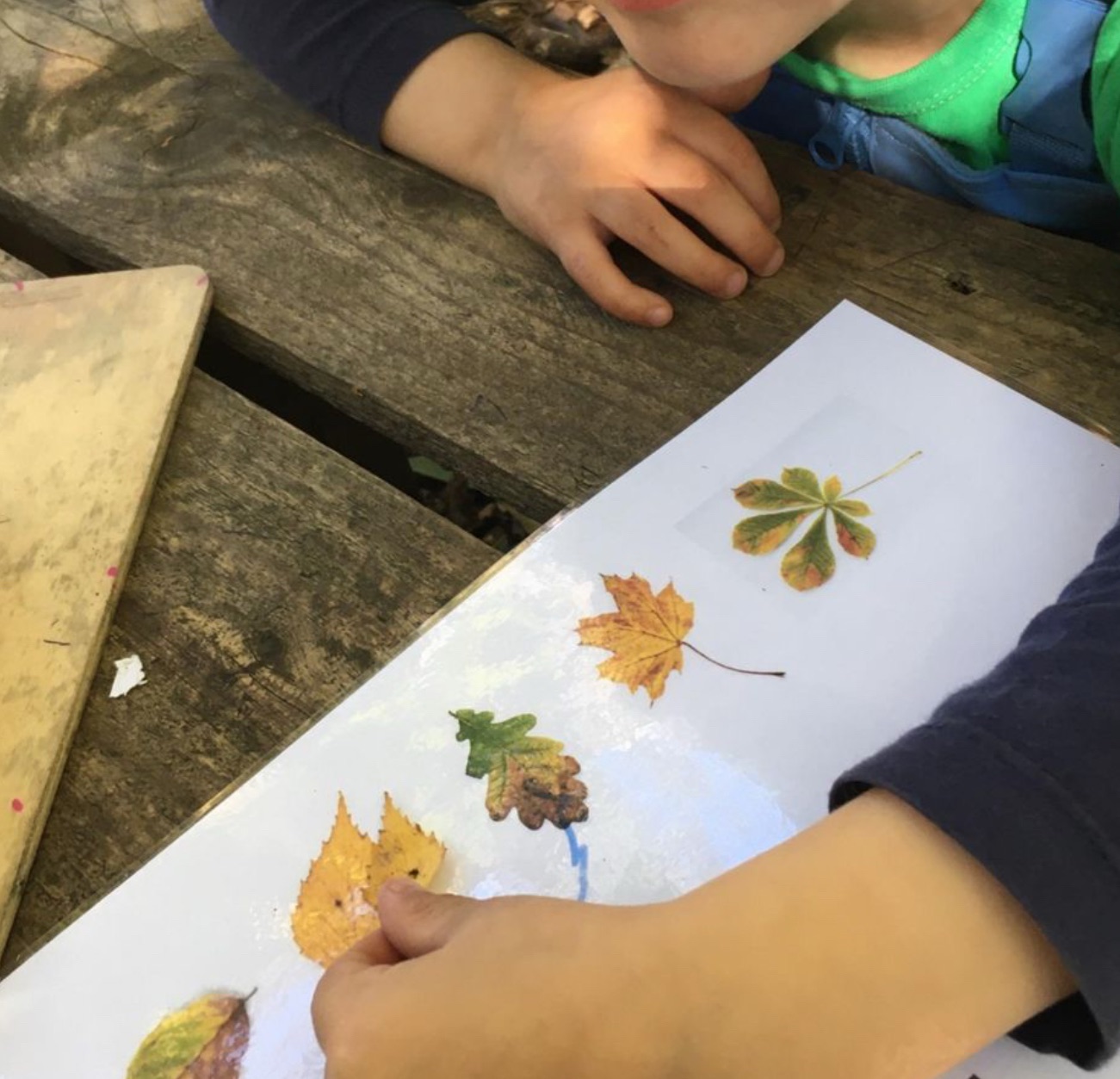
Matching different-shaped leaves side by side sparks early ideas of “same” and “different” as well as giving opportunity to notice shapes and patterns.
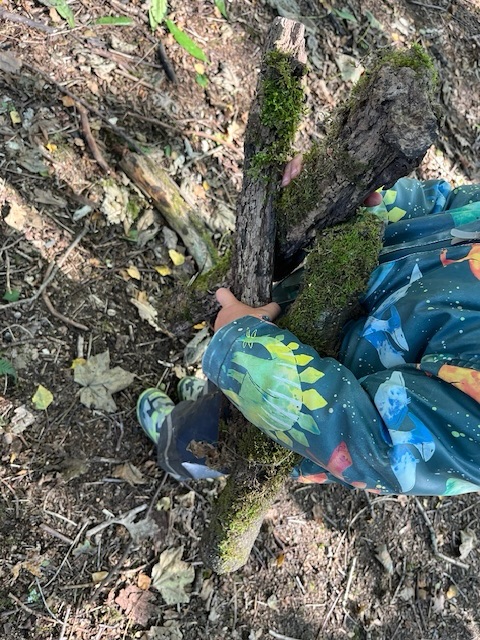
A blade of long grass can serve as a measuring tape, while a line of sticks can represent a number sequence. Even the words children use in play — heavy, light, over, under, beside, on top — are all mathematical concepts, helping them make sense of position and space.

This “play” might not seem as important as more formal “lessons,” but it gives children the freedom to notice which, in turn leads to appreciation and understanding. In play, children test ideas, repeat actions, and build understanding that lasts. They are engaged because the maths belongs to them. They grow in independence because they are free to explore. And they deepen relationships as they problem-solve together. All of this is learning, with no paper or pencil in sight.

There’s another dimension too: by working with what nature provides, children also see maths as part of caring for the world. They begin to connect number, measure, and pattern with the cycles of growth and change around them. That’s why this kind of learning matters so much for our wider focus on Climate Action.
To value our resources and understand our impact, we first have to notice what nature is showing us.
Wild Maths reminds us that learning doesn’t only happen in classrooms. It flourishes in the woods, the garden, and the seasons — and our role is to make space for children to discover it.

Next time you and your child go for a next walk, see what maths you can spot together. Count the steps you take, compare the size of leaves in your hands, or notice which stick is longest. Such simple activities show how maths is woven into everyday life outdoors.
For more inspiration, Maths Week Scotland has a lovely Nature Walk activity full of simple ideas to try.
 Cambusbarron Village Nursery